


There is a belief that runs through most B2B businesses. It goes something like this: if we do more marketing, we will get more leads, and if we get more leads, we will close more sales. It sounds logical. Most boards have approved budgets on the back of it. Most marketing agencies have been paid because of it.
The problem is not that the belief is wrong in every detail. The problem is that it describes a world that no longer exists — and building your commercial model around it is quietly destroying your returns.
What traditional B2B marketing was designed for
Traditional B2B marketing was designed for a world where the seller controlled information. If a buyer wanted to understand their options, they had to speak to a salesperson. That gave salespeople leverage at the early stage of a conversation, and it gave marketing a clear job: generate awareness, create demand, and hand warm contacts to sales.
That model had a logic to it. The buyer was dependent on the seller for education. Marketing filled the top of the funnel. Sales did the rest.
That logic collapsed the moment buyers gained independent access to information. It did not collapse gradually. It collapsed completely.
The number that should change how you think about your pipeline
83% of buyers now research digitally before they will speak to a salesperson. That is not a trend. That is a structural shift in buyer behaviour that has been baked in for over a decade. Most B2B companies have still not reworked their commercial model to reflect it.
What that statistic means in practice is this: by the time a buyer contacts you, they have already formed a view. They have read your content, or your competitor's. They have looked at case studies, pricing signals, and LinkedIn profiles. They have decided, at least provisionally, whether you are worth talking to. The sale does not start when they call. It started weeks or months earlier, in a process you probably had no visibility into and no influence over.
Traditional marketing treats that invisible early stage as someone else's problem. It focuses on generating contacts rather than building the kind of presence that shapes how buyers think before they ever raise their hand.
The 95% you are ignoring
Here is the other number that matters. At any given point, roughly 95% of your addressable market is not actively buying. They are not in a purchase cycle. They are not evaluating vendors. They are just running their businesses.
Traditional lead generation is almost entirely focused on finding the 5% who are ready now. That makes sense if you believe the only thing that matters is this quarter's pipeline. It makes no sense if you want a business that compounds over time.
The 95% will eventually have a need. When they do, they will think of the companies they already know and trust. If you have spent the last two years chasing the 5%, you have spent almost no resource building visibility and credibility with the 95%. So when they are ready, they call someone else.
Traditional marketing does not have a good answer for this. It is not designed for it. The model was never built to create sustained presence with people who are not yet in market.
Why more spend does not fix a structural problem
The typical response to declining marketing performance is to spend more, test more channels, hire more specialists. I have watched this play out in dozens of businesses over thirty years. It does not work, not because the people are wrong, but because the model is wrong.
MarTech has inflated B2B go-to-market team sizes by a factor of roughly five compared to what the work actually requires. More tools, more headcount, more campaigns — all of it layered on top of a model that was already struggling. The teams get bigger. The cost per qualified opportunity goes up. The conversion rates stay flat or fall.
When I started in sales, you needed about 400 cold calls to find one genuinely interested party — at roughly 75 calls a day, that is over a week of work for a single bite. The cold outreach model has not improved since then. It has just been automated and scaled, so you can now be ignored by more people, faster.
Applying AI to this model does not solve the problem either. AI amplifies whatever commercial model you give it. If the model is built around chasing the 5%, AI helps you chase the 5% harder. The 95% still does not know you exist.
What a different approach looks like
The shift is not complicated to describe, though it is harder to execute than most people expect. You stop building your commercial model around demand capture and start building it around demand creation.
Demand capture is what traditional marketing does. It finds people who are already looking and tries to get in front of them. It is competitive, expensive, and entirely dependent on someone else deciding they have a need.
Demand creation is different. It means building consistent, useful presence in front of the 95% before they have a need. It means your content does the early-stage education that buyers used to rely on salespeople for. It means when someone in your market finally does enter a purchase cycle, they already know who you are and what you stand for.
This is not a campaign. It is a structural change to how the business shows up commercially. The Digital Marketing Transformation article on this site goes into more of the mechanics — but the starting point is always the same: accepting that the model you have been running was not designed for the market you are now operating in.
The CMO average tenure is eighteen months. Three months to plan, twelve to execute, three to exit. That cycle is not long enough to rebuild a commercial model. It is barely long enough to run a few campaigns and report on them. So the structural problem persists, because no one stays long enough to fix it at the root.
I have written more on what genuine change looks like in practice in the Digital Transformation Success piece, and there is a broader collection of thinking in the Transformation articles section if you want to go deeper on any of this.
The question worth sitting with
If 83% of your buyers are researching before they speak to you, what are they finding? If 95% of your market is not buying right now, what are you doing to be the obvious choice when they are? If your marketing spend is growing but your cost per opportunity is not falling, what does that tell you about the model rather than the execution?
Traditional marketing does not fail because the people running it are incompetent. It fails because it was built for a different era and most businesses have never replaced it with something built for this one.
If this argument resonates, the course is where to start. Everything described above — the buyer behaviour shift, the 95% problem, the model that actually works in the market as it is now — is worked through in structured detail across 20 modules and 170 lessons. It is CPD certified and built by someone who started cold calling and spent thirty years watching what fails. Most CEOs do it alongside their VP of Sales. They work through it together, align on what is actually broken, and decide what to change without tearing everything down and starting over. The OS exists as the delivery mechanism if you want it — we built it after doing everything manually, because at some point that stops being scalable. But the course stands entirely on its own, and for most businesses, the course alone is enough to change the direction.
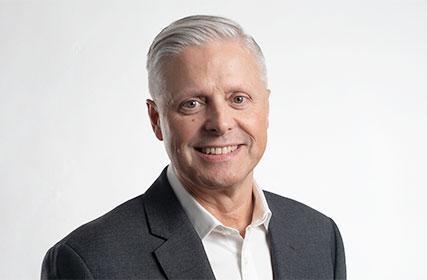 Nigel Maine is the founder of salesXchange and the architect of the sX Operating System — a B2B commercial framework built from three decades of running technology sales, not from marketing theory.
His work is grounded in a single conviction: that most B2B growth models were designed for consumer buying behaviour and have never been corrected. salesXchange exists to fix that. Nigel works directly with CEOs and commercial leadership teams across Technology, SaaS and Professional Services to rebuild their GTM infrastructure from first principles.
He is a published author, public speaker and hosts a weekly B2B live show broadcast across LinkedIn, YouTube and Facebook. Contact: 0800 970 9751 or


