


Stop Sending Emails People Delete — Start Sending Emails They Actually Read
Most B2B businesses are running email campaigns the wrong way. They blast the same message to everyone on their list, call it a strategy, and then wonder why open rates are flat and unsubscribes are climbing. The problem is not email. Email is still one of the highest-performing channels in B2B — research consistently shows it returns around £36 for every £1 spent. The problem is what you are putting in those emails and who you are sending them to.
We have been saying this for years. The businesses that fail at email are not failing because the channel is dead. They are failing because they treat a list of 5,000 contacts as one person. They send the same subject line, the same body copy, and the same call to action to a finance director, a marketing manager, and a head of IT — all in the same send. That is not email marketing. That is noise.
If you are serious about B2B Digital Growth, you need to rethink how your emails are structured from the ground up. This article walks you through exactly how to do that.
- The Importance of Personalisation
- Segmentation and Personas
- Writing for Your Target Audience
- The Power of Social 444
- Five Key Takeaways
- Relevant FAQs
- What to Do Next
1. The Importance of Personalisation
Personalisation is not about dropping a first name into a subject line and calling it done. That is the bare minimum, and most of your competitors are already doing it. Real personalisation means the content of the email — the problem it references, the outcome it promises, the language it uses — reflects something specific about the person reading it.
The numbers back this up. Personalised emails generate a 29% higher open rate and a 14% higher click-through rate than non-personalised equivalents. Personalised subject lines alone make emails 26% more likely to be opened. And yet, research shows only around 20% of businesses are actually doing this properly. That gap is your opportunity.
Think about how your prospects receive information. They are busy. They are sceptical. They are getting dozens of emails every day. The ones they open are the ones that speak directly to their world — their job title, their pain point, their sector. Everything else gets deleted. I have watched this pattern play out across hundreds of businesses. The moment you start writing for one specific type of person instead of everyone, your results change.
Remember: 83% of B2B buyers research digitally before speaking to anyone. They are already forming opinions about your business before you ever get a response. Your emails are part of that research process. Make them count.
2. Segmentation and Personas
Before you can personalise anything, you need to segment your audience. That means breaking your total addressable market into defined groups based on role, sector, company size, or challenge — whatever is most relevant to how you sell.
Once you have those segments, you build a persona for each. Not a fictional character with a name and a stock photo, but a clear picture of the specific problems, priorities, and questions that person has at work. What keeps them up at night? What does success look like for them? What objections do they have before they ever speak to a salesperson?
In B2B, the persona framework that matters most is what we call FABQ — Features, Attributes, Benefits, and Questions. What is your product, what does it do, what does it mean for the buyer, and what questions are they asking themselves before they engage with you? Get that right for each segment and you have the foundation for every email you will ever send to that group.
The Anonymous Buyer reality reinforces this. The overwhelming majority of your prospects will never identify themselves until they are ready to buy. Your emails are doing the work of warming those people up, long before you know who they are. That is why segment-level relevance matters so much — you are speaking to a real type of person even when you cannot name them individually.
3. Writing for Your Target Audience
Once you know who you are writing for, you write only for them. Not for everyone. Not for the business in general. For that specific persona in that specific segment.
This means different email sequences for different verticals, different job titles, different stages of awareness. A finance director does not want to read the same email as a sales director. Their pressures are different. Their language is different. Their definition of a good outcome is different. If you send them the same thing, you are wasting both their time and yours.
Good copywriting for B2B email is not about being clever. It is about being relevant. Address the specific pain point of the person reading it. Show you understand their situation. Then give them a clear reason to take the next step. Tools like ChatGPT, Claude, and Gemini can accelerate the drafting process significantly — but they amplify whatever framework you give them. Feed them a vague brief and you get vague emails. Feed them a sharp FABQ-driven persona brief and the output is far stronger. AI does not replace the thinking. It executes it faster.
Keep testing. Your open rates, click-through rates, and unsubscribe rates are telling you something every time you send. Watch them. Well-planned, personalised, and segmented B2B emails consistently achieve 30% higher open rates and 50% higher click-through rates than generic sends. That data is not theoretical — it is the difference between a campaign that generates pipeline and one that generates spam complaints.
4. The Power of Social 444
Email does not work in isolation. We developed Social 444 specifically to solve the problem of how a B2B business maintains consistent visibility without spending a fortune on paid media and without requiring your team to manually post content every day.
Social 444 stands for four adverts, posted four times a day, over four weeks — then you repeat the cycle. That gives you 120 pre-prepared adverts running continuously across LinkedIn and other B2B-relevant channels, promoting your content and keeping your business in front of your total addressable market at all times. The adverts are created in advance, scheduled automatically, and designed to drive people to your content — not straight to your website. You want them to get to know you first. Trust comes before enquiry.
The reason we batch content this way is important. Social platforms throttle accounts that try to post the same content repeatedly in a short window. By creating 120 variations in advance and running them on rotation, you stay within the platform rules while achieving the kind of consistent exposure that cold calling could never deliver. I have spent time as a cold caller. Around 400 calls to find one interested party. Social 444 reaches your whole market, every day, for pennies.
Emails sit alongside Social 444 as part of the same awareness model. The email tells your list what you broadcast last week and what you are planning next. The social posts drive awareness of the same content to the 95% of the market who are not actively buying right now — because when they eventually are, you want to be the name they already recognise. Read more about this approach in our Exposure articles.
5. Five Key Takeaways
- Personalise the content, not just the subject line. Write to the specific pain points of each role and sector. A name in a subject line does not make an email relevant.
- Segment before you write. Know exactly who each email is for before you write a single word. Use FABQ to build a clear picture of each persona's priorities and questions.
- Write one email for one person. Different job titles, different verticals, different sequences. One-size sends get deleted.
- Run Social 444 alongside your email programme. Email and social work as a combined awareness model. Batch your content in advance, automate the posting, and maintain constant visibility across your total addressable market.
- Watch your data and adjust. Open rates, click-through rates, and unsubscribes are live feedback. Use them. AI tools like ChatGPT, Claude, and Gemini can speed up the writing cycle — but only once you have a clear model to give them.
6. Relevant FAQs
Q: How can I improve my B2B email open rates?
A: Start with segmentation. Know exactly who you are writing to before you write anything. Then personalise the content to the specific role and pain point of that person — not just the subject line. Research shows personalised, segmented campaigns consistently achieve 30% higher open rates than generic sends. Sending from a named individual rather than a brand address also makes a measurable difference.
Q: What is Social 444?
A: Social 444 is the content promotion strategy we developed at salesXchange. It stands for four adverts, posted four times a day, over four weeks — repeated continuously. You create 120 adverts in advance, schedule them to post automatically across LinkedIn and other B2B channels, and maintain constant visibility with your total addressable market without paying for clicks or requiring daily manual effort. It works alongside your email programme as part of a combined awareness model.
Q: How do I create useful personas for B2B email?
A: Use the FABQ framework — Features, Attributes, Benefits, Questions. For each segment, define what your product or service is, what it does, what it means for that specific buyer, and what questions they are asking themselves before they engage. That gives you the structure for every email you write to that group. In B2B, persona-level relevance matters far more than demographic detail. Focus on the problem the person is trying to solve at work, not their age or location.
7. What to Do Next
If your email campaigns are not performing, the answer is not to send more emails. It is to send better ones to the right people. Segment your audience. Build FABQ-driven personas for each group. Write specifically for each one. Run Social 444 alongside to keep your brand visible to the 95% of your market who are not ready to buy yet. Then use the data your email platform gives you to keep improving.
The businesses that crack this combination — targeted email supported by consistent automated social exposure — are the ones that stop relying on cold outreach and start building a pipeline that comes to them. That is what B2B Digital Growth actually looks like in practice.
Everything in this article — the segmentation, the persona frameworks, the Social 444 model, the email strategy — is part of a wider diagnosis that most B2B businesses never make. They fix the symptoms (better subject lines, cleaner lists) without fixing the underlying model that determines whether any of it works. The GTM Reset course is where that diagnosis happens.
The course is 20 modules, CPD certified, built on sales fact and not marketing theory. Most CEOs go through it with their VP of Sales, aligning on the diagnosis together before involving the rest of the GTM team and implementing the new strategy.
Review The Reset TodayRelated Articles in This Series
- How to Cut Cold Calling and Use Content to Build a B2B Prospect Pipeline
- TAM-Driven B2B Revenue Growth — How to Reach Your Entire Addressable Market
- The Complete Guide to Digital Selling Techniques for B2B Sales Teams
- B2B Banners, Adverts and Memes — How Visual Content Builds Exposure
- How to Increase B2B Website Traffic Using Organic Content
- B2B Exposure — How to Stay Visible to Your Market
- How to Reach B2B Prospects at Scale Using Live Streaming
- Cold Calling Is a 400-to-1 Shot. Here Is Why B2Bs Keep Doing It.
Complete guide: Social 444 Content Exposure Strategy
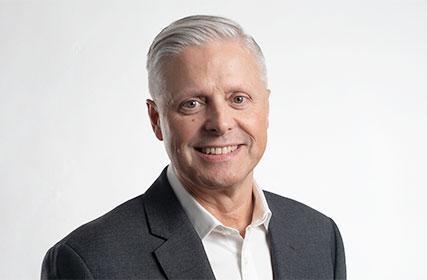 Nigel Maine is the founder of salesXchange and the architect of the sX Operating System — a B2B commercial framework built from three decades of running technology sales, not from marketing theory.
His work is grounded in a single conviction: that most B2B growth models were designed for consumer buying behaviour and have never been corrected. salesXchange exists to fix that. Nigel works directly with CEOs and commercial leadership teams across Technology, SaaS and Professional Services to rebuild their GTM infrastructure from first principles.
He is a published author, public speaker and hosts a weekly B2B live show broadcast across LinkedIn, YouTube and Facebook. Contact: 0800 970 9751 or


